James Cook's fumble surge likely to ease, 25-year NFL study finds
The short version
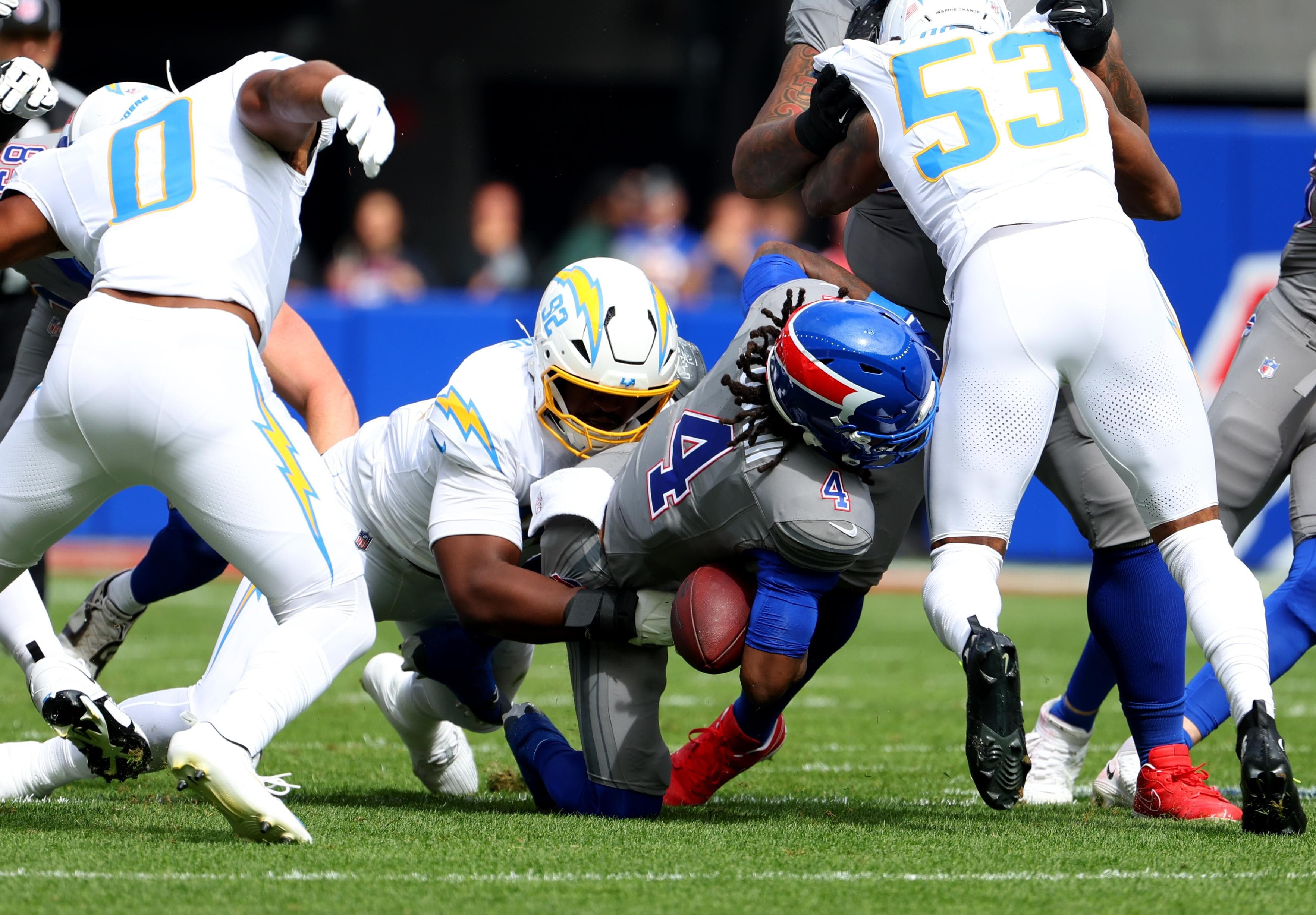
- James Cook fumbled on the opening play of Week 3 against the Chargers, his second of the season.
- A 25-year nflverse study found running back fumble rates correlate at just 0.197 season to season, near total randomness.
- The most fumble-prone backs fell from a 2.17% fumble rate to 1.24% the next season; the safest rose from 0.08% to 0.83%.
- Cook's fumble rate has jumped from 0.80 per 100 touches before 2025 to 2.01 since, with eight fumbles in his last 14 games.
- Buffalo faces the New England Patriots in Week 4.
A Yahoo Sports analysis of 25 seasons of NFL play-by-play data found running backs with high fumble rates tend to drift back toward the norm, though timing is uncertain.
Buffalo Bills running back James Cook fumbled on the opening offensive play of Week 3 against the Chargers, his second fumble of the season. The mistake intensified questions about his ball security and prompted a Yahoo Sports study into whether NFL fumbles come down largely to chance.
The study drew on 25 years of nflverse play-by-play data, spanning regular-season play from the start of the 2001 campaign through the 2025 season. League-wide over that stretch, running backs put the ball on the ground roughly 1.01 times per 100 touches.
The analysis first tested how much a running back's fumble rate carries over from one season to the next. Among backs with at least 100 touches, the correlation in fumble rates between consecutive seasons measured just 0.197, barely above the 0.0 reading that would signal no relationship at all. Fumble rates are therefore dominated by noise, and a single season offers little clue about the one that follows.
A second test looked for regression toward the mean. Every back in the sample was ranked by fumble rate in one season and divided into five groups, running from the safest ball-carriers to the most careless, with the same players' rates tracked the following year.
The results showed a sharp pull back toward the average. The most fumble-prone fifth went from a 2.17% fumble rate in the first season to 1.24% in the second, a decline of 0.93 percentage points that almost halved the figure. The safest fifth moved the opposite way, jumping from 0.08% to 0.83%, a roughly tenfold rise. The middle three groups landed in between, going from 0.58% to 0.81%, from 0.91% to 1.02%, and from 1.34% to 1.07%.
The correction did not wipe out every difference. Even after regressing, the worst group's second-season rate of 1.24% stayed above the 0.83% posted by the group that had been most secure with the ball, evidence that frequent fumblers remain somewhat more vulnerable than reliable ones. Still, the gap between the groups narrowed considerably, with second-season rates clustered far more tightly across the sample than first-season rates.
Cook's own numbers explain why Buffalo supporters are on edge. Counting playoff games, his career fumble rate is 1.25 per 100 touches. It stood at just 0.80 during his first three seasons with the Bills, before the 2025 campaign. Since the beginning of 2025, however, it has climbed to 2.01 per 100 touches, and he has fumbled eight times in his past 14 games including the postseason, a rate that would place in the study's most fumble-prone 20%. The analysis concedes a figure that high cannot be written off entirely as chance.
The longer historical view nonetheless points toward improvement. Running backs who have fumbled at rates similar to Cook's since the start of 2025 have eventually seen their numbers fall back substantially toward the league norm, though the study cannot say when that correction will arrive for Cook. Drawing on the 25-year sample, the analyst predicts it will begin soon, encouraging news for Cook and the Buffalo offense with a Week 4 matchup against the New England Patriots next up.

