Analyst: Klopp using Nations League to audition 44 Germany call-ups
The short version
- Jürgen Klopp summoned 44 players split into two groups for his first Germany window
- Analyst Dr. Constantine Eckner told Casino.at the Nations League is currently serving as Klopp's testing competition
- Eckner expects leaner squads, departures for some newcomers, and tactical work to begin at November's break
- Germany have yet to look fully cohesive in Klopp's opening two matches, including October 1 against Serbia in Munich
- Germany visit Greece on Sunday, October 4 at 2:45 PM EDT at Toumba Stadium
German football analyst Dr. Constantine Eckner says the Nations League is letting Jürgen Klopp assess 44 call-ups, with leaner squads and system work expected from November.
Jürgen Klopp's first international window in charge of Germany has looked nothing like the sharply defined teams he assembled at club level with Liverpool and Borussia Dortmund. Rather than rushing toward a settled starting lineup, the new head coach summoned 44 players, split them into two groups, and used this month's UEFA Nations League fixtures as a sweeping audit of the national player pool.
That reading comes from Dr. Constantine Eckner, an analyst, journalist and tactical commentator whose work centers on the Bundesliga and German football. Speaking to Casino.at, he argued that the competition currently operates almost like a league for the new coach, whose immediate priority is sizing up numerous candidates before any long-term calls are made.
Eckner expects the picture to sharpen once the second international break begins in November. Squads could get smaller then, some of the less experienced call-ups may have already made their last appearance for Germany, and only at that stage would Klopp begin drilling the tactical structure that defined his clubs. "Right now, it's not anything like Jürgen Klopp from like we saw at Liverpool or before that even Dortmund," Eckner said.
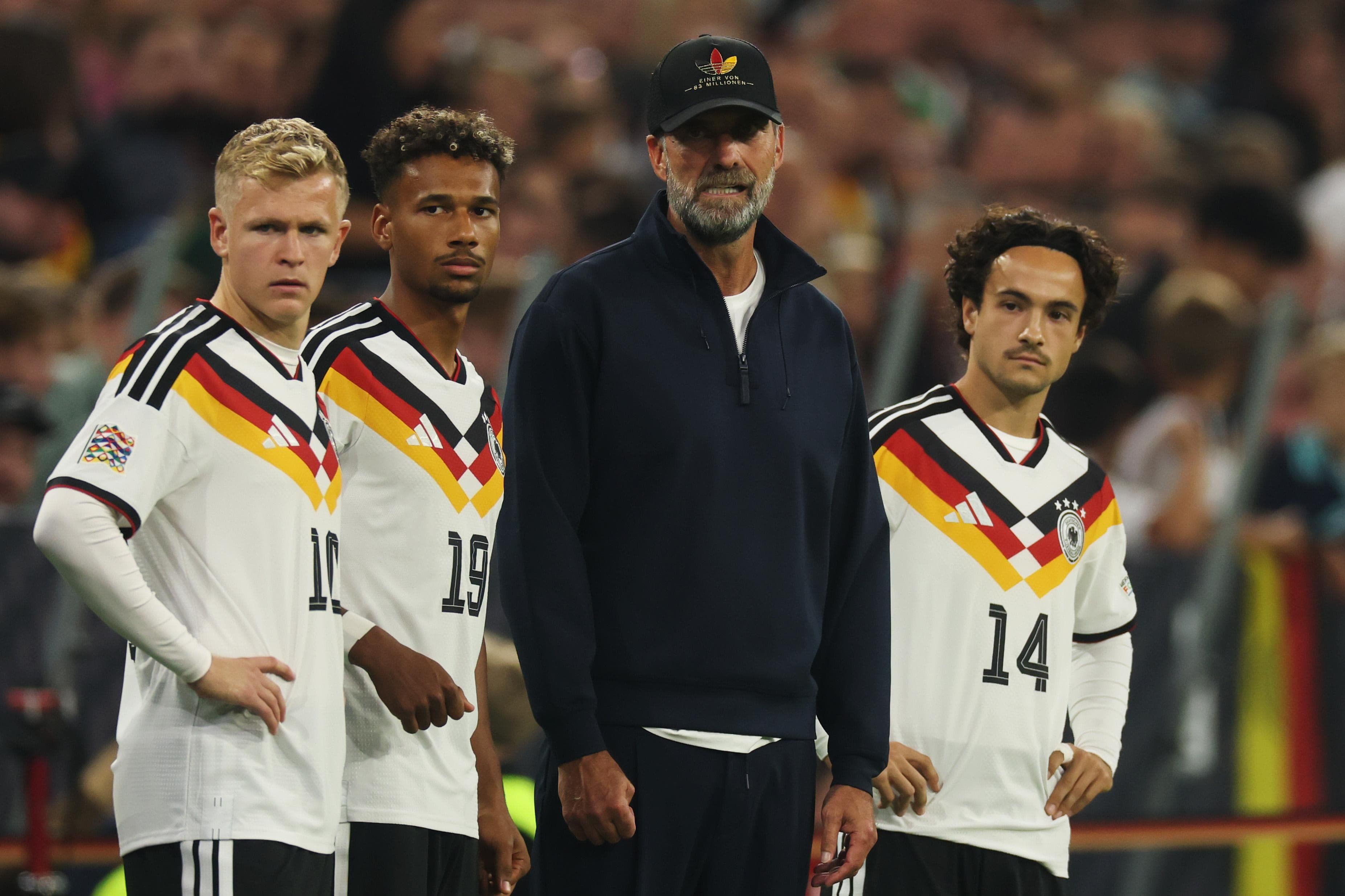
That rotation-heavy policy may help explain why Germany have yet to look fully cohesive across Klopp's opening two fixtures. One of them came on October 1, when Serbia visited Munich's Allianz Arena for a UEFA Nations League 2026/27 group-phase fixture. During that match, Jonathan Burkardt, Bambase Conte and Ridle Baku stood ready to enter from the bench while the head coach observed from the touchline.
Eckner believes the tournament suits this kind of exercise precisely because friendlies are far harder to come by in international football than they were for managers of past eras. With exhibition matches limited, competitive fixtures now serve as the main setting in which unfamiliar names can be assessed for national-team duty.
Nor is Klopp an outlier among national-team bosses. Eckner described the trend, in effect, as "a verdict on how important the Nations League is," noting that other head coaches are currently handing opportunities to newcomers and backup options of their own.
How seriously the competition gets treated, he added, depends on how far a team advances. "If you reach the final, it's taken seriously. If you are eliminated at the group stage, no one takes it that seriously," Eckner said, describing the latitude managers have to experiment before the consequences grow.
Viewed that way, the early stretch of Klopp's tenure is about personnel decisions more than tactical polish. The task at hand is settling on the group of players who will anchor the national team once the assessment phase ends and attention turns to the major tournaments ahead.
Germany's Nations League schedule resumes with an away match against Greece on Sunday, October 4, kicking off at 2:45 PM EDT at Toumba Stadium.
Games to watch